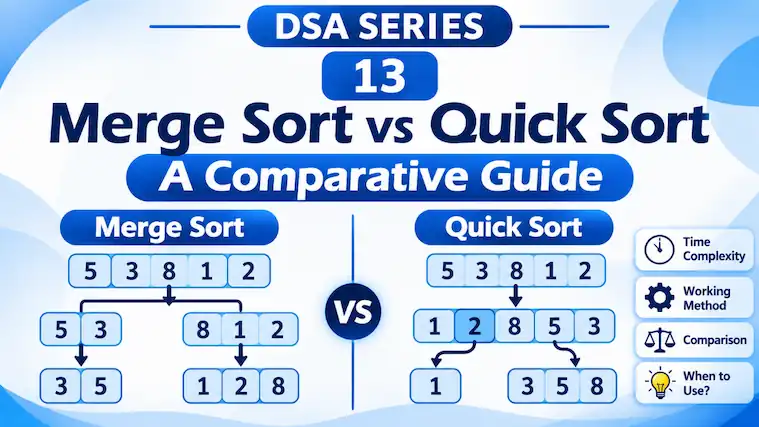
Merge Sort and Quick Sort: A Comparative Guide
Understand how Merge Sort and Quick Sort work with step-by-step examples, C implementations, and a comparison of their time and space complexity.
Articles · Category
This series covers the fundamentals of Data Structures and Algorithms, from arrays, linked lists, stacks, and queues to trees, graphs, sorting, searching, and problem-solving techniques. It focuses on understanding how data is organized and how algorithms work efficiently to solve computational problems.
30 articles
Understand how Merge Sort and Quick Sort work with step-by-step examples, C implementations, and a comparison of their time and space complexity.
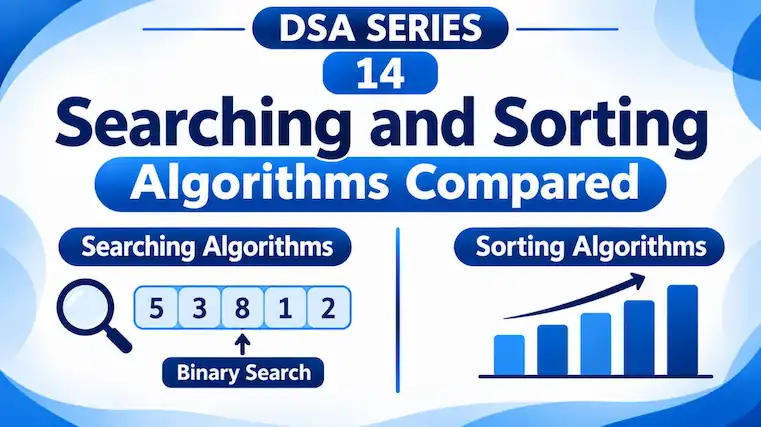
Compare Linear Search, Binary Search, and five popular sorting algorithms. Understand their working methods, time complexities, and when to use each one.
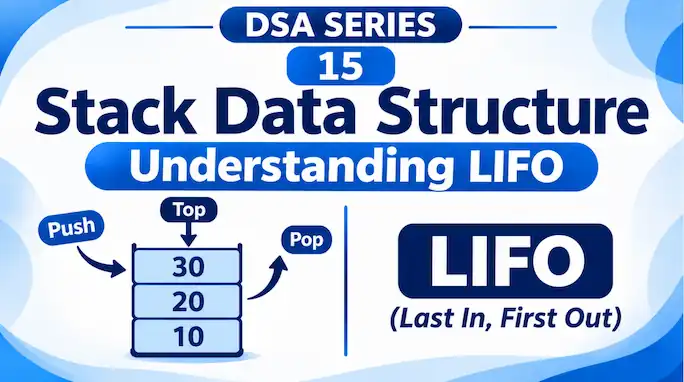
Learn how the Stack data structure works using the LIFO principle, with simple examples, basic operations, C implementation, and real-world applications.
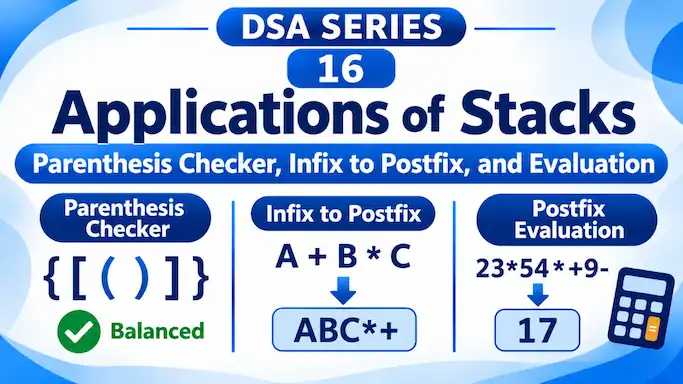
Explore three important applications of stacks: balanced parenthesis checking, Infix to Postfix conversion, and Postfix expression evaluation, with step-by-step examples and C…
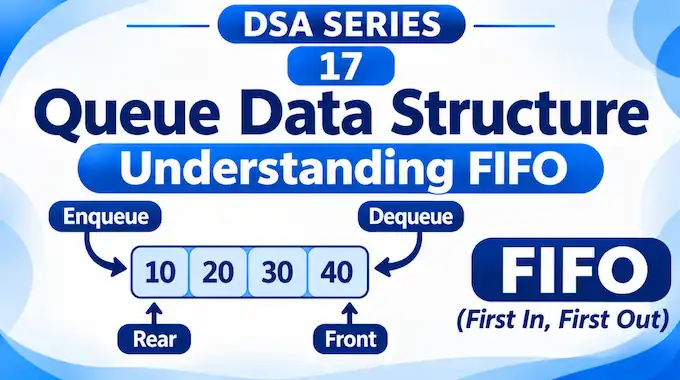
Understand the Queue data structure and its FIFO principle. Learn Enqueue, Dequeue, Front, and Rear operations with simple examples, C implementation, and…
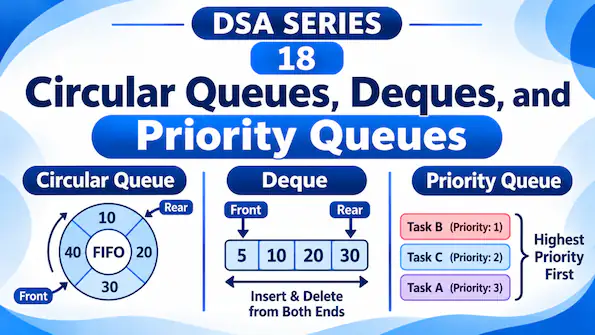
Explore Circular Queues, Deques, and Priority Queues. Understand how they work, their operations, differences, and practical C implementations with simple examples.
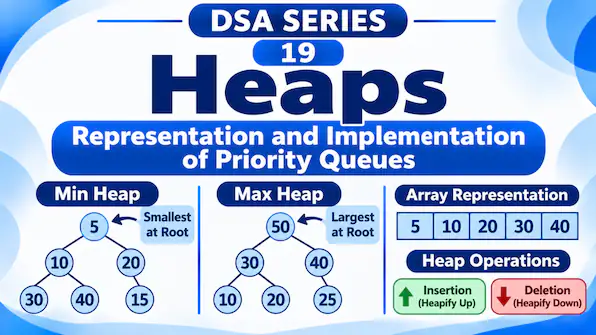
Learn how Min Heaps and Max Heaps work, how Binary Heaps are represented using arrays, and how insertion and deletion maintain the…
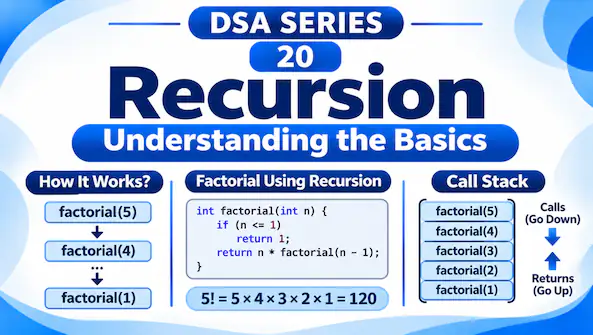
Understand recursion, base cases, recursive calls, and the call stack. Learn how to trace recursive functions and calculate factorial using simple C…
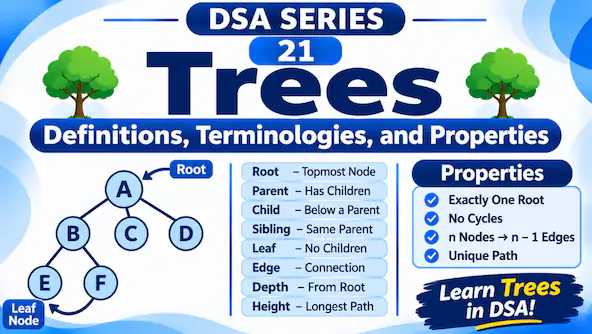
Learn the basics of tree data structures, including root, parent, child, leaf, degree, depth, height, and important tree properties with simple diagrams.
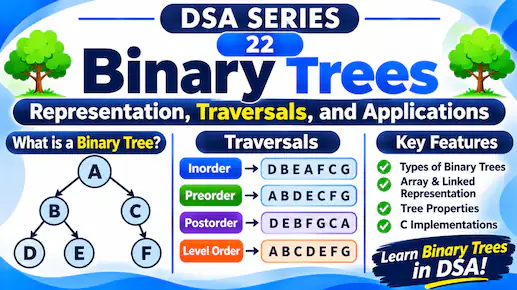
Learn binary tree types, array and linked representations, and inorder, preorder, postorder, and level order traversals with diagrams and C examples.
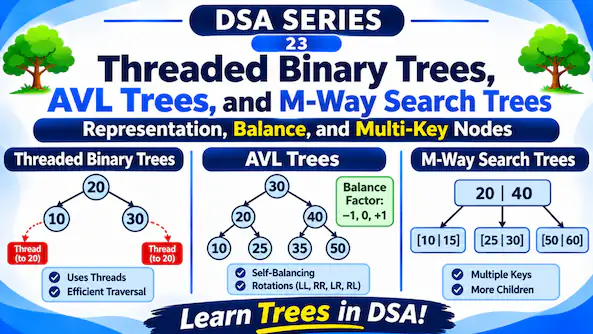
Explore Threaded Binary Trees, AVL Trees, and M-Way Search Trees. Understand threading, balance factors, rotations, and multi-key nodes with simple diagrams.
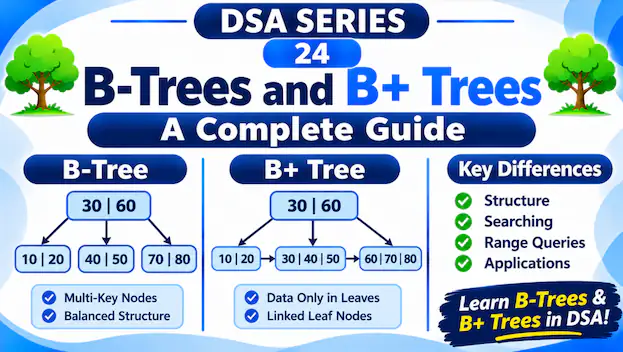
Learn B-Trees and B+ Trees, their structure, searching, insertion, deletion, and how they are used in databases and indexing.